

Field service organizations require intelligent automated dispatch and scheduling applications to manage the growing number of job orders, maximize dispatcher and technician productivity, and manage customer service. StraViso’s Dispatch Cloud provides a centralized platform to seamlessly manage dispatch operations, allowing field service providers to allocate resources efficiently, track their movements, and communicate with field personnel. The platform ensures sending the right people to do the right job at the right time.
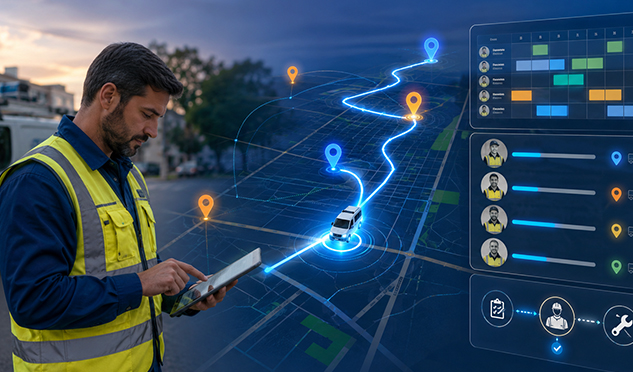
A centralized platform that manages and coordinates dispatch operations, allowing supervisors to allocate resources efficiently, track their movements, and communicate with field personnel. It provides a daily snapshot of critical pending dispatches, SLA breaches, real-time ETAs, on-time performance, and vehicle capacity. Supervisors can track and monitor the routes taken by field technicians, off-loading time, check-in and check-out time, and job status real-time.


Dispatch Cloud’s real-time location tracking allows technicians to geo-fence their locations and send updates to customers. AI-powered 360° technician guidance and smart map visuals for intelligent location routing help technicians visualize and analyze location-based data, access job schedules, execute work orders, and map-based scheduling. It empowers supervisors with uber-like tracking, viewing the team’s performance, attendance, and job data, technicians’ performance and scorecard, and on-call schedule.
Supervisors get accurate ETAs and resolve unique routing, scheduling, and task allocation with highly configurable, next-gen route optimization. With the help of business rules, supervisors can decide the best route to achieve optimized operational efficiency. Supervisors can verify addresses and map territories with geotagging.
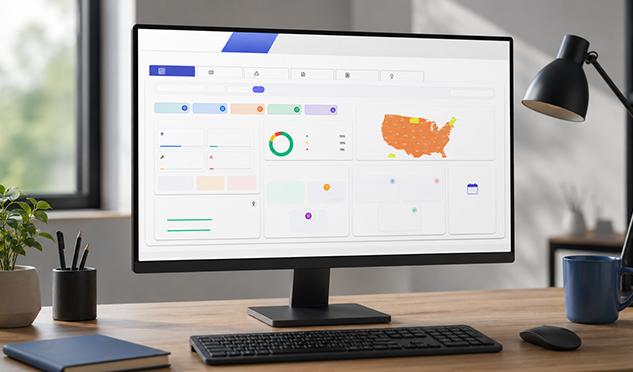
A customizable visual summary that helps identify trends, bottlenecks, and areas of improvement. Provides analytical insights into dispatch operations, resource utilization, field technicians’ daily performance, average response times, and customer satisfaction ratio. Supervisors can also compare the progress of different customers, scheduled vs. assigned work orders, budget-oriented metrics, FTFR, MTBF, and MTTR.








Manage the complete pipeline of field operations anytime, anywhere.
DownloadStraViso Dispatch Cloud is a centralized, AI-powered platform for managing field dispatch operations. It helps supervisors allocate resources efficiently, track technician movements, and communicate with field personnel — ensuring the right people are sent to the right job at the right time while maximizing dispatcher and technician productivity.
Dynamic dispatch scheduling adjusts job assignments and schedules as operational conditions change. Instead of relying only on a fixed schedule, dispatchers can account for technician availability, job priorities, location, travel time, and changing workloads to make more informed assignment decisions.
AI-powered dispatch software can evaluate factors such as technician availability, location, job priority, and travel distance to support resource allocation. It can help identify scheduling gaps, coordinate assignments, and reduce avoidable idle time, allowing dispatchers to focus on exceptions and more complex decisions.
Real-time technician tracking gives dispatchers visibility into field personnel locations and job status as work progresses. This information can help supervisors monitor field activity, assess estimated arrival times, coordinate assignments, and keep customers informed about service visits.
Route optimization helps determine more efficient routes for field personnel based on factors such as job locations, travel distances, scheduling requirements, and business rules. Better route planning can reduce unnecessary travel and help technicians complete scheduled work more efficiently. Actual results depend on traffic, job duration, and other operating conditions.
Dispatch solution can help teams monitor scheduled work, response times, estimated arrivals, and jobs at risk of missing their deadlines. By making delays and potential SLA breaches more visible, it helps dispatchers prioritize work and reallocate resources where possible. Meeting SLAs also depends on available personnel, job complexity, and other operational constraints.
Field service management covers the broader process of delivering services in the field, including work orders, technician activities, service appointments, and asset or inventory information. Dispatch management focuses more specifically on assigning jobs, coordinating field resources, monitoring technician movements, and managing schedules and routes. The two functions complement each other.
Dispatch dashboards consolidate operational information into a view of job status, workforce activity, scheduling progress, and performance indicators. They can help supervisors identify pending assignments, delays, resource constraints, and performance trends, making it easier to decide where intervention is needed.
Businesses should evaluate dynamic scheduling, resource allocation, real-time location tracking, route optimization, configurable business rules, operational dashboards, and SLA monitoring. They should also assess how the software supports existing dispatch processes and whether it provides the visibility needed by dispatchers, supervisors, and field operations leaders.
Dispatch analytics can reveal patterns in delayed jobs, resource utilization, response times, route efficiency, and scheduling performance. Comparing scheduled work with assigned and completed jobs can help managers identify where capacity constraints or process delays occur and determine which changes may improve performance.

Copyright © 2026 StraViso.com All rights reserved.